Introduction
A welding helmet is only as practical as the suspension system that holds it in the correct position. The outer shell and viewing lens receive much of the attention when people discuss welding protection, but the headgear inside the helmet plays an important role in how the helmet sits on the user’s head, how easily it can be adjusted, and how consistently the viewing area stays positioned during work.
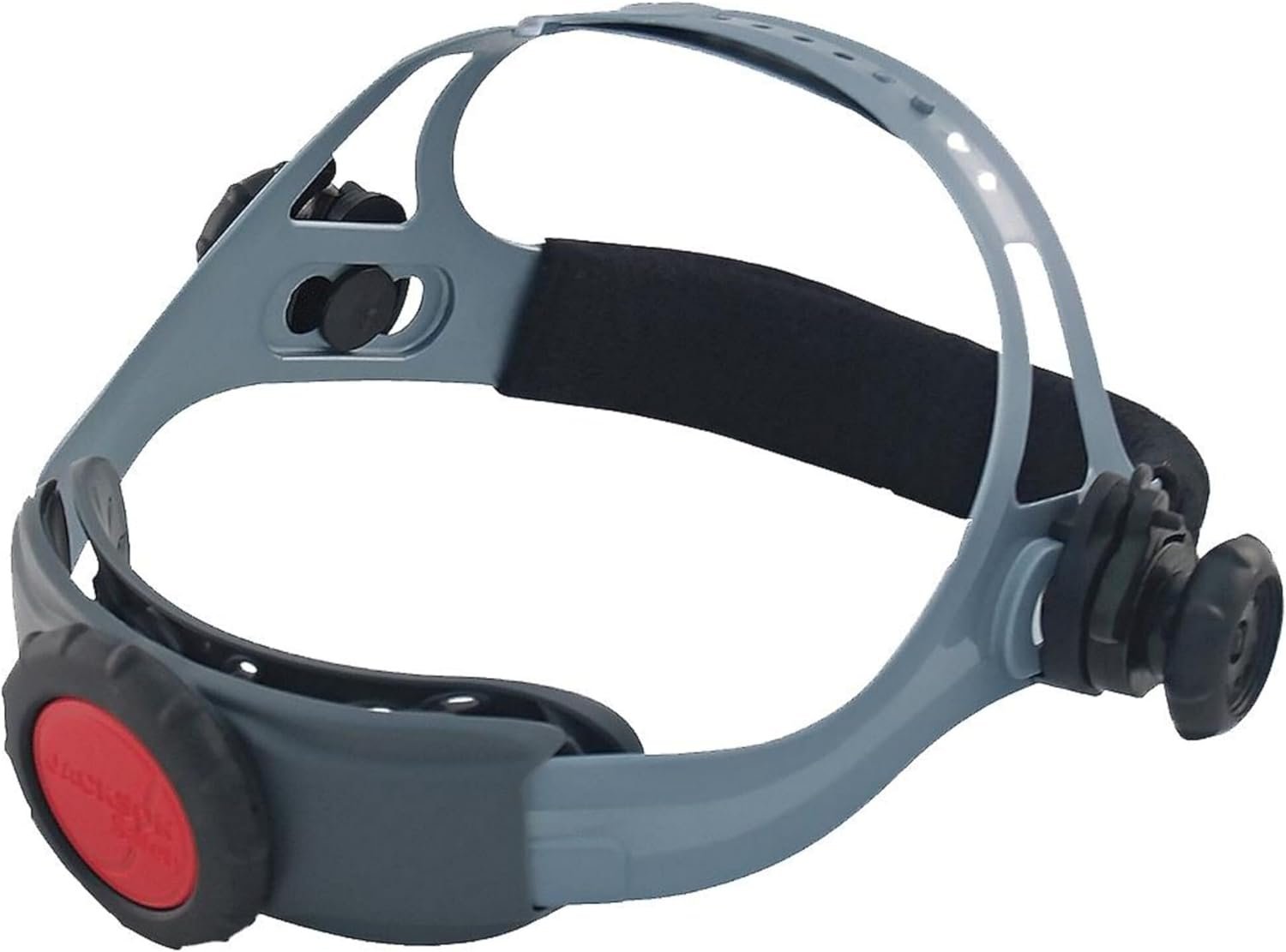
The Jackson Safety 370 Speed Dial Replacement Ratcheting Headgear, product number 20696, is designed as a replacement suspension system for compatible Jackson Safety welding helmets. Rather than replacing an entire helmet, this type of component allows users to replace worn or damaged headgear while retaining a compatible helmet shell and lens assembly. Jackson Safety identifies the 20696 as its 370 Speed Dial Replacement Headgear and lists it as a U.S.-origin product.
The design combines several adjustment points. A large ratcheting dial allows circumference adjustment, while a three-position slider changes the distance between the user’s eyes and the welding lens. A crown strap provides vertical positioning, and the helmet can lock into an elevated position when lifted. Jackson Safety also describes a lock-nut feature intended to help keep components together when the bracket is loosened.
These details matter because welding is a task where the position of the helmet can affect the user’s ability to work comfortably and maintain a consistent view through the intended viewing area. A replacement headgear assembly therefore needs to be considered not simply as a comfort accessory, but as a component that must be properly matched to the helmet and correctly installed.
This guide explains the Jackson Safety 370 Speed Dial Replacement Headgear, its main features, adjustment system, compatibility considerations, practical uses, maintenance considerations, and differences between replacement headgear and other welding helmet suspension categories.
Key Features of the Jackson Safety 370 Speed Dial Headgear
Replacement Suspension for Welding Helmets
The Jackson Safety 370 Speed Dial is a replacement headgear assembly rather than a complete welding helmet.
That distinction is important.
The headgear provides the suspension and adjustment system that connects the helmet to the user’s head. It does not replace the welding lens, helmet shell, protective plates, or other components responsible for the helmet’s certified protective characteristics.
Jackson Safety lists product number 20696 specifically as a 370 Speed Dial Replacement Headgear.
When replacing a helmet suspension, users should therefore verify that the replacement is appropriate for their particular helmet model rather than assuming that all welding helmets use interchangeable headgear.
Oversized Ratcheting Adjustment Dial
One of the most recognizable characteristics of the 370 suspension is its large adjustment dial.
Jackson Safety describes the dial as an oversized soft-rubber adjuster that is designed to be easy to locate and turn, including while wearing gloves.
This is particularly relevant in welding environments because gloves are commonly worn as part of appropriate protective equipment.
A small adjustment mechanism can be inconvenient when precise finger movement is difficult. A larger dial provides a more substantial surface for turning.
The ratcheting system also allows incremental adjustment instead of requiring the user to make a large change at once.
Fine-Tooth Ratcheting Mechanism
The 370 Speed Dial uses a fine-tooth ratcheting mechanism.
According to Jackson Safety, this mechanism is intended to provide more precise adjustment without excessive tightening.
A ratcheting system works differently from a simple strap or friction adjustment. Instead of relying entirely on pulling a band to a particular position, the user rotates the dial to progressively change the headgear’s fit.
This can be useful when the helmet needs a small adjustment after putting it on.
Three-Position Lens-Distance Slider
The headgear includes a three-position slider that adjusts the distance between the user’s eyes and the welding lens. Jackson Safety identifies this as one of the main adjustment features of the 370 system.
This adjustment is separate from the circumference dial.
The distinction is useful:
- The ratchet changes how tightly the headgear fits around the head.
- The slider changes the front-to-back relationship between the user’s eyes and the helmet.
- The crown adjustment changes the vertical position of the helmet.
Having several independent adjustment points gives users more control over the overall position of the helmet.
Crown Strap Adjustment
The crown strap allows the headgear to be raised or lowered on the user’s head.
Jackson Safety describes the crown adjustment as a way to position the helmet vertically for comfort and performance.
This can be especially relevant when the helmet feels too high or too low even though the circumference is correctly adjusted.
For example, tightening the circumference does not necessarily solve a helmet that sits too low over the forehead. The crown adjustment addresses a different dimension of fit.
Locking Up and Down Position
The 370 design incorporates a locking mechanism that helps hold the helmet in an elevated position.
Jackson Safety describes the headgear as locking into a detent when lifted and remaining in the upward position until manually lowered. The company also describes vertical lock-in as a way to reduce unwanted helmet movement or “creeping.”
This is useful for the common workflow in which a welder raises the helmet to inspect a workpiece, prepare a joint, position equipment, or communicate with another person and then lowers the helmet before welding.
The locking function is part of the mechanical suspension system and should not be confused with the protective function of the welding lens.
Rear Swivel Headband Design
The 370 system includes a rear headband designed to swivel upward and downward.
Jackson Safety describes its patented quick-fit rear headband as part of the system’s adjustment architecture.
A rear headband that can move vertically provides another way to accommodate the shape and position of the user’s head.
This can also help when a helmet needs to be worn for extended periods, because proper adjustment is not necessarily about making the suspension as tight as possible. The objective is to achieve a secure, stable fit without unnecessary pressure.
Sweatband
The headgear incorporates a sweatband intended to absorb perspiration and help prevent sweat from interfering with vision. Jackson Safety lists replacement sweatbands for the 370 system separately, including product number 32187.
Sweat management can be particularly relevant during welding because work environments may involve heat, protective clothing, physical effort, and extended periods of helmet use.
The sweatband is a replaceable component, meaning the suspension does not necessarily need to be discarded simply because the band becomes worn or requires replacement.
Users should follow the manufacturer’s cleaning and replacement guidance for the particular sweatband supplied with their headgear.
Lock-Nut Feature
Jackson Safety also identifies a lock-nut feature designed to help keep the headgear components together even when the bracket is loosened.
This type of mechanical detail can be useful during adjustment and maintenance because it helps keep the assembly organized when components are being repositioned.
As with any PPE component, users should inspect the hardware regularly and avoid using a suspension assembly if important parts are cracked, missing, excessively worn, or no longer secure.
How the Jackson Safety 370 Headgear Can Be Used
Replacing Worn Helmet Suspension
One of the most straightforward applications is replacing an existing suspension that has become worn.
Over time, a headgear assembly can experience repeated adjustment, perspiration, dust, impact, and general mechanical wear.
A replacement suspension can provide a way to restore the helmet’s internal headgear without automatically replacing every other component.
Before installing the replacement, users should identify the exact helmet model and confirm compatibility.
Replacing Damaged Adjustment Components
The ratcheting mechanism is one of the parts that receives repeated use.
If the adjustment dial no longer functions correctly, the headgear has become damaged, or the suspension cannot maintain an appropriate fit, replacing the entire headgear assembly may be more practical than attempting to repair individual components that are not intended to be serviced.
The correct approach depends on the helmet manufacturer’s replacement-part instructions.
Maintaining a Consistent Helmet Position
Once installed on a compatible helmet, the 370 suspension provides several adjustment points that can be configured around the user’s head.
A sensible fitting process can include:
- Place the helmet on the head.
- Adjust the crown strap for the desired vertical position.
- Use the ratcheting dial to establish a secure circumference.
- Adjust the three-position slider if the helmet needs to sit closer to or farther from the face.
- Raise and lower the helmet to verify that the movement functions correctly.
- Confirm that the suspension and helmet remain securely connected.
The exact procedure can vary according to the helmet model and manufacturer’s instructions.
Supporting Work That Requires Frequent Helmet Movement
Welding work can involve repeated transitions between welding and inspection or setup.
The 370 headgear’s up-position locking mechanism is designed around that type of movement. Jackson Safety states that the suspension locks when lifted and stays in the upward position until manually lowered.
This can make the helmet easier to reposition during tasks where the operator needs to inspect a joint or prepare the next welding operation.
The helmet must still be lowered and correctly positioned before performing welding operations that require its protection.
Understanding Compatibility
Compatibility is one of the most important considerations when purchasing replacement headgear.
Jackson Safety identifies product 20696 as the 370 Speed Dial replacement headgear and lists it for use with various Jackson Safety helmet families. Its U.S. product page describes the product as fitting most Jackson Safety welding helmets in the applicable 370 series, while Jackson Safety’s European product information identifies model 20696 for Graphic welding helmets and lists other 370 headgear part numbers for specific helmet families.
Third-party product listings also identify compatibility with several Jackson Safety series, including Halo X, HSL, Nitro, WH40, and SmarTIGer.
However, compatibility should be checked by exact helmet model and revision where possible.
A similar-looking mounting system does not automatically mean that a replacement suspension is approved for every helmet.
Why Exact Model Matching Matters
Welding helmets are protective equipment.
A replacement component should not be selected solely because the mounting holes appear similar.
The suspension must attach securely and position the helmet correctly. If the replacement is not intended for a particular helmet, the resulting fit or mechanical connection may not be appropriate.
For this reason, users should consult the helmet’s documentation, manufacturer’s replacement-part information, or an authorized supplier when there is uncertainty.
Who the Jackson Safety 370 Replacement Headgear May Be Suitable For
Welders With Worn Suspension Systems
The product is primarily relevant to people who already own a compatible Jackson Safety welding helmet and need to replace its suspension.
This can be more targeted than replacing an entire helmet when the shell, lens assembly, and other components remain suitable for continued use.
Professional Welding Environments
Professional welders may use their helmets frequently and therefore subject the suspension to regular adjustment and wear.
A replacement headgear system can be relevant where maintaining a properly functioning suspension is part of routine PPE maintenance.
Fabrication Shops
Fabrication environments can involve repeated welding, grinding, positioning, and inspection.
The ability to adjust the helmet without removing it and to lock the helmet in the raised position can be useful for this type of workflow.
Maintenance and Repair Departments
Industrial maintenance workers may use welding helmets alongside other forms of protective equipment.
A replacement suspension can be useful for maintaining existing compatible helmets rather than treating every worn suspension as a reason to discard the entire assembly.
Occasional Welders
The product can also be relevant to people who weld less frequently if they own a compatible Jackson Safety helmet and the existing headgear has deteriorated.
Even infrequent PPE should be inspected before use. Storage over long periods does not eliminate the need to check for damage, deterioration, or missing components.
Important Things to Consider
The Headgear Is Not the Welding Lens
One of the most important distinctions is that the 370 Speed Dial is a headgear replacement, not a complete welding helmet.
It does not provide the shade protection of a welding lens by itself.
The protective performance of a welding helmet depends on the complete compatible assembly, including the shell, lens or auto-darkening filter, safety plates, and other applicable components.
Users should therefore never assume that installing a new suspension automatically restores every aspect of a helmet’s protective condition.
Inspect the Entire Helmet
When replacing headgear, it is sensible to inspect the rest of the helmet at the same time.
Check for:
- Cracks in the shell
- Damaged mounting points
- Loose components
- Scratched or damaged protective plates
- Problems with the auto-darkening filter
- Missing hardware
- Damaged seals or gaskets where applicable
- Excessive wear around attachment areas
If another component is damaged or no longer meets the manufacturer’s requirements, replacing only the suspension may not be sufficient.
Follow the Helmet Manufacturer’s Instructions
Different welding helmets can have different assembly requirements.
Even when a replacement headgear is designed for multiple models, the installation procedure can vary.
The manufacturer’s instructions should take priority over generalized installation advice.
If the helmet is used in a workplace subject to regulatory or employer requirements, the applicable workplace PPE procedures should also be followed.
Do Not Modify the Headgear
It may be tempting to drill new holes, cut straps, bend components, or otherwise modify a suspension to make it fit another helmet.
This should be avoided unless the manufacturer explicitly provides an approved modification procedure.
Protective equipment should remain within its intended configuration.
Fit Should Be Secure Without Excessive Tightening
A ratcheting dial makes it easy to tighten the headgear incrementally.
That does not mean the dial should be tightened as far as possible.
Jackson Safety specifically describes the fine-tooth ratcheting system as allowing a precise fit without overtightening.
The goal is a stable fit that keeps the helmet positioned correctly without creating unnecessary pressure.
Lens Distance Is a Separate Adjustment
Users sometimes focus entirely on the circumference adjustment and overlook the three-position slider.
If the helmet feels too close or too far from the eyes, tightening the rear dial may not solve the problem.
The lens-distance slider is designed to address that front-to-back positioning.
Replace Worn Sweatbands When Necessary
Sweatbands are consumable components.
Jackson Safety lists replacement sweatbands specifically for the 370/117A headgear family, demonstrating that the sweatband can be replaced separately.
Replacing the sweatband can be a more targeted maintenance step than replacing the entire suspension when the rest of the headgear remains in suitable condition.
Consider Helmet Weight
Headgear affects how a helmet sits on the head, but it does not eliminate the weight of the helmet itself.
A heavier helmet may require careful adjustment of the crown strap, circumference, and lens distance to achieve a comfortable and stable fit.
The suspension can help distribute and position the helmet, but it cannot change the underlying weight of the helmet shell and attached components.
Comparison With General Welding Helmet Suspension Categories
Ratcheting Headgear vs. Traditional Adjustment Straps
Traditional helmet suspensions may use basic strap adjustments that require manually repositioning the band.
A ratcheting system uses a dial that allows incremental tightening and loosening.
The Jackson Safety 370 uses a large ratcheting dial specifically designed for this purpose.
For users who frequently adjust their helmets, this mechanism can provide a different fitting experience from a simple strap-based suspension.
Replacement Headgear vs. Complete Welding Helmet
A complete welding helmet includes the protective shell, viewing system, suspension, and other components.
Replacement headgear addresses only the suspension system.
This makes replacement headgear appropriate when the existing helmet remains compatible and otherwise serviceable, while a complete helmet may be necessary when the shell, lens, or other critical components are damaged or unsuitable.
Multi-Adjustment Headgear vs. Basic Suspension
A basic suspension may provide fewer adjustment points.
The 370 system includes:
- Circumference adjustment
- Three-position lens-distance adjustment
- Crown strap adjustment
- Up/down locking functionality
- Rear headband movement
This creates a more configurable suspension architecture.
Replacement Suspension vs. Replacement Sweatband
A sweatband addresses perspiration management.
A replacement headgear assembly addresses the larger suspension system.
Because Jackson Safety offers replacement sweatbands separately, users can replace only the sweatband when appropriate rather than replacing the entire headgear assembly.
The correct replacement depends on which component is actually worn or damaged.
Practical Fitting Tips
Start With the Crown Strap
The crown strap determines how high or low the helmet sits.
Adjusting it first can provide a better starting point before tightening the circumference.
Adjust the Circumference Gradually
Use the oversized dial to make small adjustments rather than immediately tightening the headgear significantly.
A gradual approach makes it easier to find a stable position without unnecessary pressure.
Check the Lens Position
Use the three-position slider to adjust the relationship between the eyes and the lens.
The appropriate setting depends on the helmet design, user’s face shape, and preferred working position.
Test the Up-and-Down Movement
Before beginning work, raise and lower the helmet to make sure the mechanism moves properly.
The helmet should remain securely attached to the suspension and should not exhibit unexpected looseness.
Check Hardware Regularly
Repeated movement can eventually loosen or wear mechanical components.
Routine inspection is especially important for PPE because a suspension problem can affect how the helmet sits during use.
Cleaning and Maintenance Considerations
The headgear is exposed to perspiration and the general environment of the workplace.
Regular maintenance can help keep the suspension in usable condition.
The sweatband deserves particular attention because it is the part most directly exposed to perspiration.
When cleaning any part of the suspension, users should follow Jackson Safety’s instructions for the specific component. Avoid using cleaning chemicals that could degrade plastics, rubber, fabric, or other materials unless the manufacturer identifies them as appropriate.
The headgear should also be allowed to dry appropriately after cleaning.
If a sweatband becomes heavily worn, replacement may be preferable to attempting to restore it indefinitely.
The adjustment mechanism should not be forced if it becomes difficult to operate. Resistance, cracking, broken components, or abnormal movement can indicate that the suspension needs inspection or replacement.
Why Replacement Headgear Can Be Practical
Replacing a component rather than an entire piece of equipment can make sense when the remaining equipment is still appropriate for use.
For example, a welding helmet may have a serviceable shell and lens but an aging suspension.
In that situation, a replacement headgear assembly can address the worn component directly.
This approach also allows users to retain a helmet they are already familiar with, provided that the helmet remains within the manufacturer’s intended service condition and all protective components are suitable.
However, replacement should never be used as a reason to keep a helmet that has suffered significant damage or whose protective components are no longer reliable.
Frequently Asked Questions
What is the Jackson Safety 370 Speed Dial Replacement Headgear?
It is a replacement suspension system for compatible Jackson Safety welding helmets. The product number is 20696. Jackson Safety describes it as a 370 Speed Dial ratcheting headgear system.
Does the headgear include the welding helmet?
No. The 20696 is replacement headgear. The welding helmet shell and protective lens components are separate.
What does the Speed Dial do?
The large ratcheting dial adjusts the circumference of the headgear. Jackson Safety describes it as having a soft rubber grip and being designed for adjustment even when wearing gloves.
Can the headgear be adjusted while wearing a helmet?
The large rear dial is designed to allow size adjustment without removing the helmet.
Does the headgear adjust the distance between the eyes and lens?
Yes. It has a three-position slider designed to adjust the lens distance.
Can the helmet be locked in the raised position?
Yes. Jackson Safety describes a detent mechanism that holds the helmet in the upward position until it is manually lowered.
Does the headgear include a sweatband?
Yes. Jackson Safety lists a sweatband as part of the 370 headgear design and also offers replacement sweatbands separately.
Is the sweatband replaceable?
Yes. Jackson Safety lists replacement sweatband product number 32187 for the 370/117A headgear family.
Is the Jackson Safety 370 headgear compatible with every welding helmet?
No. Compatibility depends on the helmet model and suspension configuration.
Jackson Safety lists product 20696 as a 370 replacement headgear and provides model-specific information for its helmet families. Third-party suppliers also list compatibility with several Jackson Safety models, but users should verify the exact helmet model before installation.
Is the 20696 made in the United States?
Jackson Safety’s current U.S. product page lists the country of origin for product 20696 as the United States.
Does the headgear provide welding protection by itself?
No. The headgear is the suspension component. Welding protection depends on the complete compatible helmet assembly, including the appropriate shell, lens/filter, safety plates, and other required components.
Can the headgear be used with a damaged welding helmet?
A replacement suspension should not be considered a way to make a significantly damaged helmet safe again. The entire helmet should be inspected, and damaged protective components should be addressed according to the manufacturer’s instructions.
Why is the crown strap useful?
The crown strap changes the vertical position of the helmet. This is separate from tightening or loosening the circumference around the head.
What is the three-position slider used for?
It changes the distance between the user’s eyes and the helmet’s viewing area. This allows another dimension of fit adjustment beyond the circumference dial.
Is a ratcheting suspension different from a basic strap suspension?
Yes. A ratcheting suspension uses a dial and incremental mechanism to adjust the circumference, while simpler suspensions may rely more heavily on manual strap positioning.
Can the headgear be used by professional welders?
It is designed as a replacement suspension for compatible Jackson Safety welding helmets and can therefore be relevant to professional welding environments where those helmets are used. Proper compatibility, installation, inspection, and workplace PPE requirements remain important.
Conclusion
The Jackson Safety 370 Speed Dial Replacement Ratcheting Headgear, product 20696, is designed to address the suspension portion of compatible Jackson Safety welding helmets. Its combination of a large ratcheting adjustment dial, three-position lens-distance slider, crown strap, up-position locking mechanism, rear headband movement, and sweatband provides several adjustment points for positioning a welding helmet.
Its role is primarily maintenance and replacement. When a compatible helmet’s suspension becomes worn or damaged while the rest of the helmet remains suitable for service, a replacement headgear assembly can provide a targeted way to address that component.
Compatibility should remain one of the first considerations. Jackson Safety provides model-specific information for the 370 series, and third-party suppliers identify several compatible Jackson Safety helmet families. Checking the exact helmet model before installation is therefore more reliable than assuming that the 20696 will fit every welding helmet.
The adjustment system is also worth understanding. The rear ratcheting dial controls circumference, the three-position slider changes lens distance, and the crown strap affects vertical positioning. Together, these mechanisms allow the user to configure the suspension across several dimensions rather than relying on a single adjustment.
At the same time, the headgear should be viewed as one component of a welding PPE system. It does not replace the protective function of the welding lens, shell, safety plates, or other required components. Regular inspection of the complete helmet remains important, particularly in demanding work environments.
For welders, fabricators, maintenance personnel, and other users of compatible Jackson Safety helmets, understanding how the 370 Speed Dial suspension works can make replacement and routine maintenance decisions more straightforward.
You can check more details on Amazon here.
As an Amazon Associate, we earn from qualifying purchases.
Leave a Reply